
One of the first decisions you’ll make when planning a corporate event productionhas nothing to do with keynote speakers, décor, or the agenda.
It’s where the event should happen.
Should you reserve a ballroom, bring everyone outside, or use a combination of both?
There is no single right answer. The best setting depends on your goals, your guests, and the kind of experience you want to create.
We’ve helped clients produce conferences, executive meetings, employee town halls, groundbreakings, and community events in a wide range of settings. One thing we’ve learned is that the strongest events begin with the right questions.
How to Choose Between Having an Indoor or Outdoor Corporate Event
Before choosing an indoor or outdoor venue, consider these five factors.
1. What time of year is your event?
Of course, weather is the first thing to consider when planning an outdoor event. No one wants to schedule a company gathering outside in July without thinking about the heat—or overlook the possibility of an afternoon thunderstorm.
But checking the forecast is only the beginning.
Think about what the conditions will mean for your guests and your program. Is there enough shade? Will attendees be comfortable sitting outside for an hour? Could wind affect presentations, signage, or equipment? How quickly could the event adjust if conditions change?
The goal is not to predict every possibility. It is to make decisions early enough that a change in weather does not become a change in plans.
A thoughtful backup plan gives your team options and allows the event to keep moving without putting the burden on your guests.
2. What does your event budget need to cover?
Whether your event takes place indoors or outdoors, your budget should support the experience you are trying to create.
An outdoor location may require services or infrastructure that an indoor venue already provides, such as power, weather protection, seating, lighting, or additional setup time.
That does not automatically make an outdoor event more expensive. It means the budget may need to be distributed differently.
Thinking through those differences early helps you identify priorities, make informed decisions, and avoid unexpected costs later in the process.
3. How many people are attending?
Attendance influences nearly every part of the event plan.
An outdoor gathering for 50 people looks very different from one for 500. As the guest count increases, seating, visibility, access, movement, and coordination become more important.
Can every attendee clearly see and hear the program? Is there enough room for people to move comfortably? Can guests enter and exit the space without creating congestion?
A realistic attendance estimate will help you choose a location that supports the program while keeping the experience comfortable for everyone involved.
4. What do you want people to experience?
This question should guide the venue decision, not the other way around.
Are you planning an executive town hall, an employee celebration, a product launch, a networking reception, or an appreciation event?
Some programs benefit from the structure and focus of an indoor environment. Others feel more inviting and energetic outdoors.
Start by deciding what you want attendees to feel, remember, and do. Then choose the setting that makes that outcome easier to achieve.
5. Could a combination of indoor and outdoor space work best?
Sometimes the strongest answer is not choosing one setting over the other.
A corporate event might use an indoor space for presentations and an outdoor area for networking, meals, demonstrations, or employee activities. This gives each part of the event an environment suited to its purpose.
The key is to make the transitions feel intentional.
When guests understand where to go and each space has a clear role, the venue supports the flow of the event instead of creating additional work for organizers.
What an Outdoor Corporate Event Can Look Like
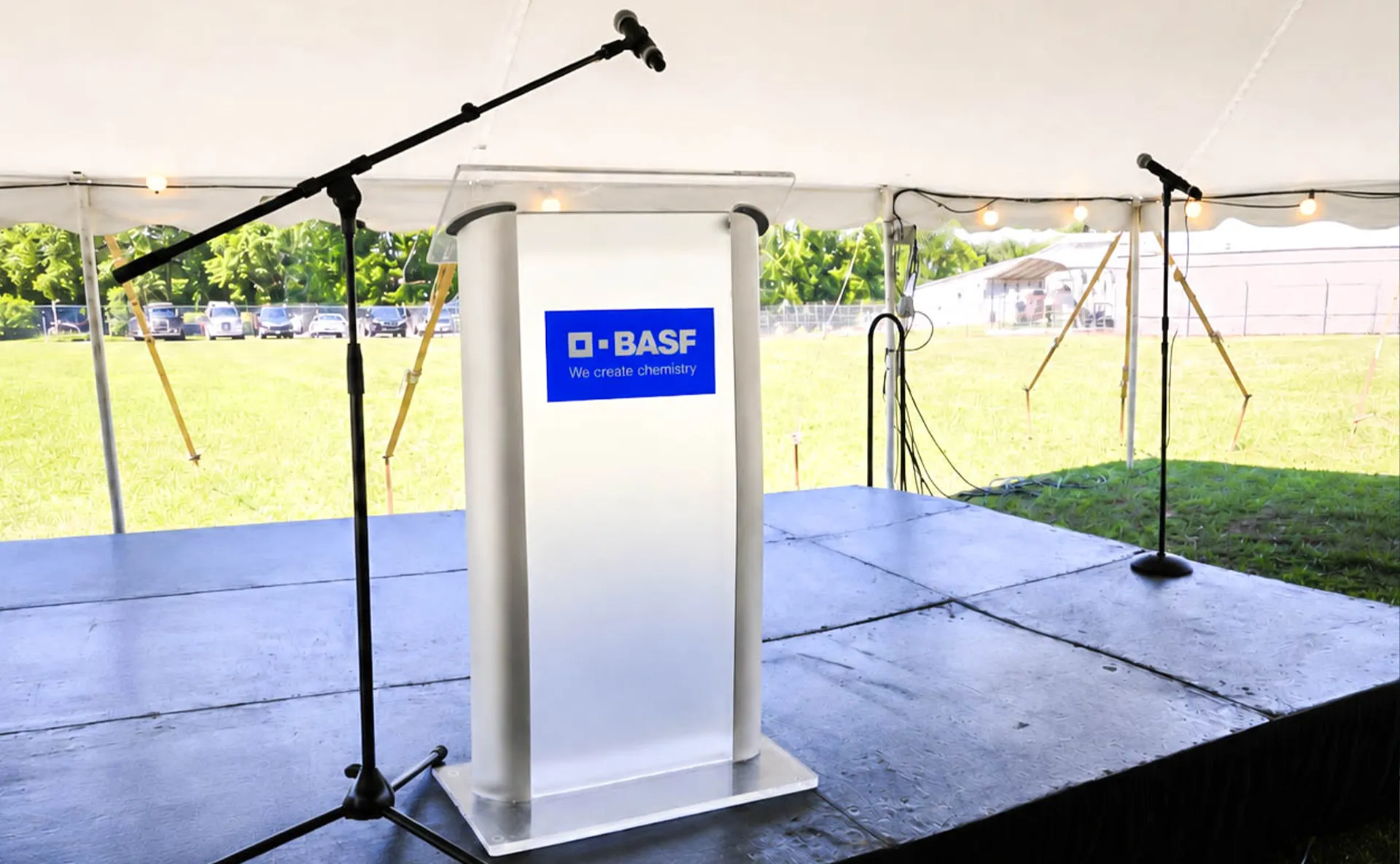
BASF’s employee town hall offers a helpful example.
The goal was not simply to move a company meeting outside. It was to bring employees together in an environment that felt open, welcoming, and different from a traditional meeting room while still supporting an important company-wide conversation.
The setting helped shape the experience, but advance planning made it work.
Before employees arrived, the team had considered guest comfort, changing weather conditions, power needs, presentation visibility, and how the program would adapt if conditions changed.
By the time the town hall began, attendees could focus on the message rather than the logistics happening around them.
That is the difference between placing an event outdoors and producing an outdoor event with purpose.
The Best Choice Is the One That Supports Your Goals
Indoor and outdoor events each offer distinct advantages.
The right choice depends on the time of year, your attendance, your budget, your program, and the experience you want people to have.
How Professional Event Production Helps Any Venue Succeed
Whichever setting you choose, thoughtful planning matters. Anticipating challenges early gives your team more options, protects the guest experience, and helps the day feel intentional from beginning to end.
Planning a Corporate Event? Bluewood Can Help
Whether your event is indoors, outdoors, or a combination of both, Bluewood’s corporate event production team can help you create an experience that keeps your goals, your guests, and every detail in focus.