
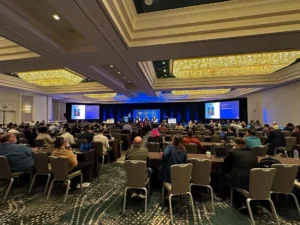
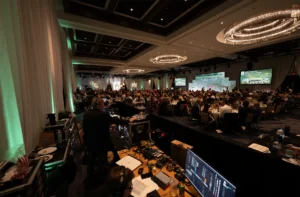
When people picture dramatic event lighting, it’s easy to think about adding more.
More color. More movement. More effects.
But more doesn’t always make an event look better. Some of the strongest lighting choices come from knowing what the room needs, where attention should go, and when a simple, well-placed look will do more than a room full of competing effects.
More Light Isn’t Always Better
Lighting does more than make a room look good. It helps shape what people notice and how a moment feels.
It can pull focus, add depth, follow movement, or shift the energy in a room. The look may change throughout an event, but the purpose stays the same: support what’s happening in front of the audience.
A lot of that comes down to contrast. If every color, movement, and effect is fighting for attention, none of them have much impact.
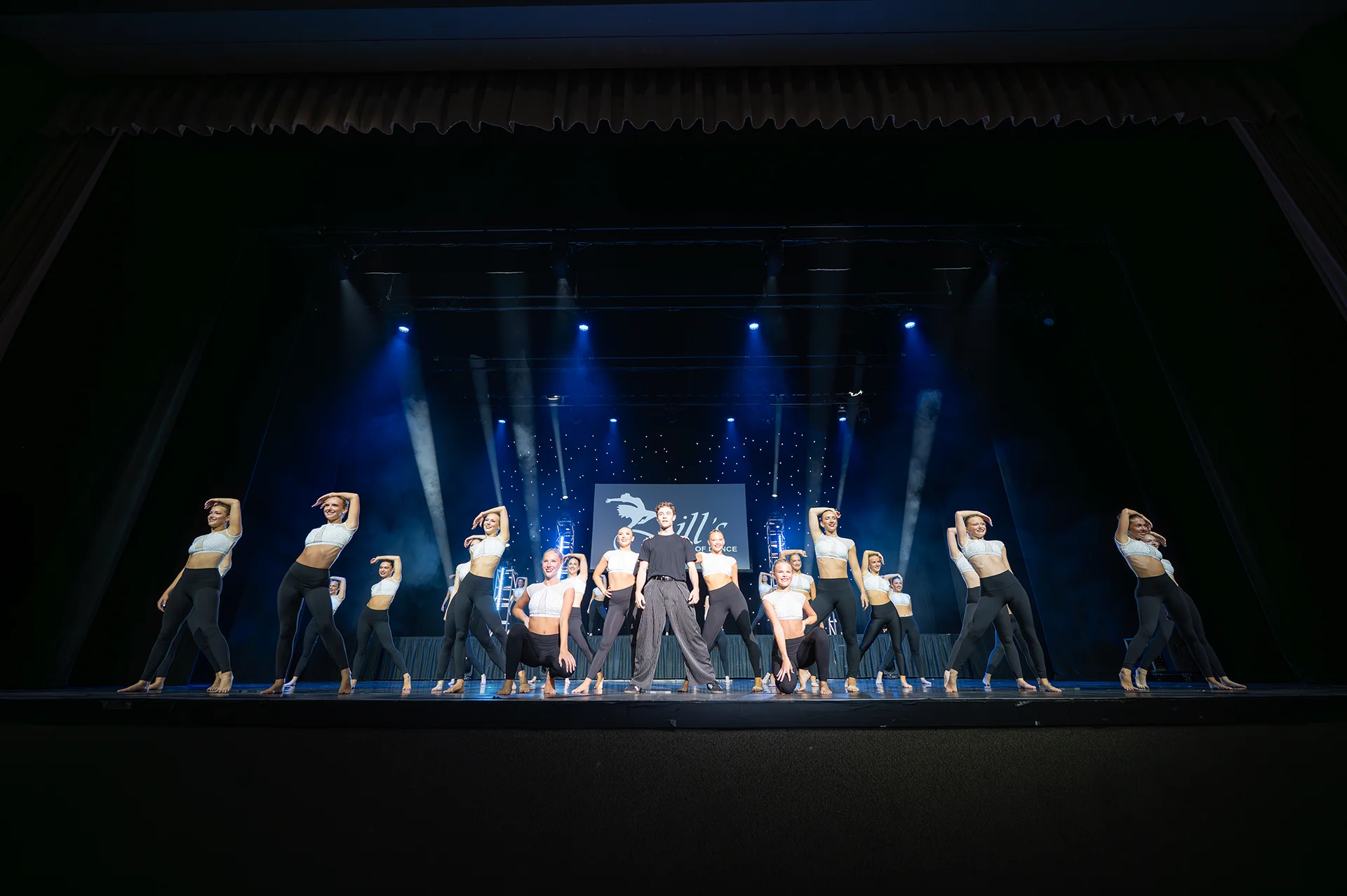
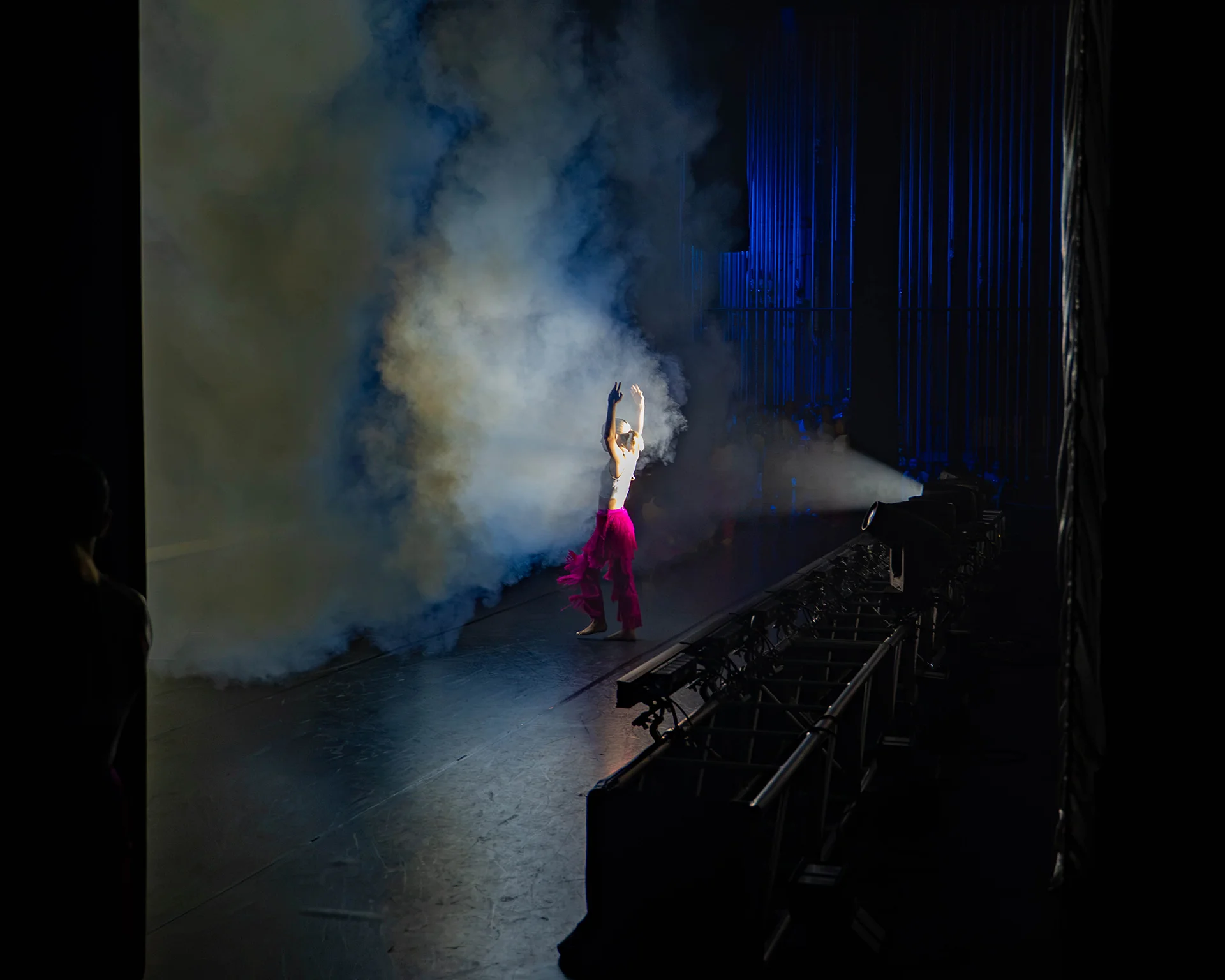
Sometimes a single light is enough to focus attention on one person onstage. Other times, the room needs a bigger shift to change the mood or bring energy into the space.
The key is knowing what the moment calls for.
Good event lighting doesn’t need to constantly draw attention to itself. It should help people notice what matters.
Start With the Moment
Every event asks something different from the room.
A gala feels different from a corporate meeting. A worship service feels different from an outdoor performance. The audience, the setting, the pace, and the purpose all shape what the lighting needs to do.
That’s why event lighting design should start with the experience, not with an effect.
Instead of asking what would look impressive on its own, it helps to ask what each part of the event needs from the space. One moment may call for a bold visual statement. Another may work better when the lighting stays simple and lets the speaker, message, or stage take the lead.
Good production is knowing the difference.
Give the Event Somewhere to Go
Lighting doesn’t have to look the same from beginning to end. As the event changes, the room can change with it.
If everything starts at full intensity, there’s less room to make later moments feel different. Letting the lighting build with the program gives you more opportunities to shift the atmosphere, highlight an important moment, or bring new energy into the room.
That doesn’t mean every event needs a dramatic reveal. It just means thinking about the experience as a whole.
A general session, for example, might begin with a clean, focused look and gradually build toward a keynote entrance, awards presentation, or closing celebration. That progression helps each part of the program feel distinct without making the entire event feel overloaded.
The Right Lighting Starts With the Right Questions
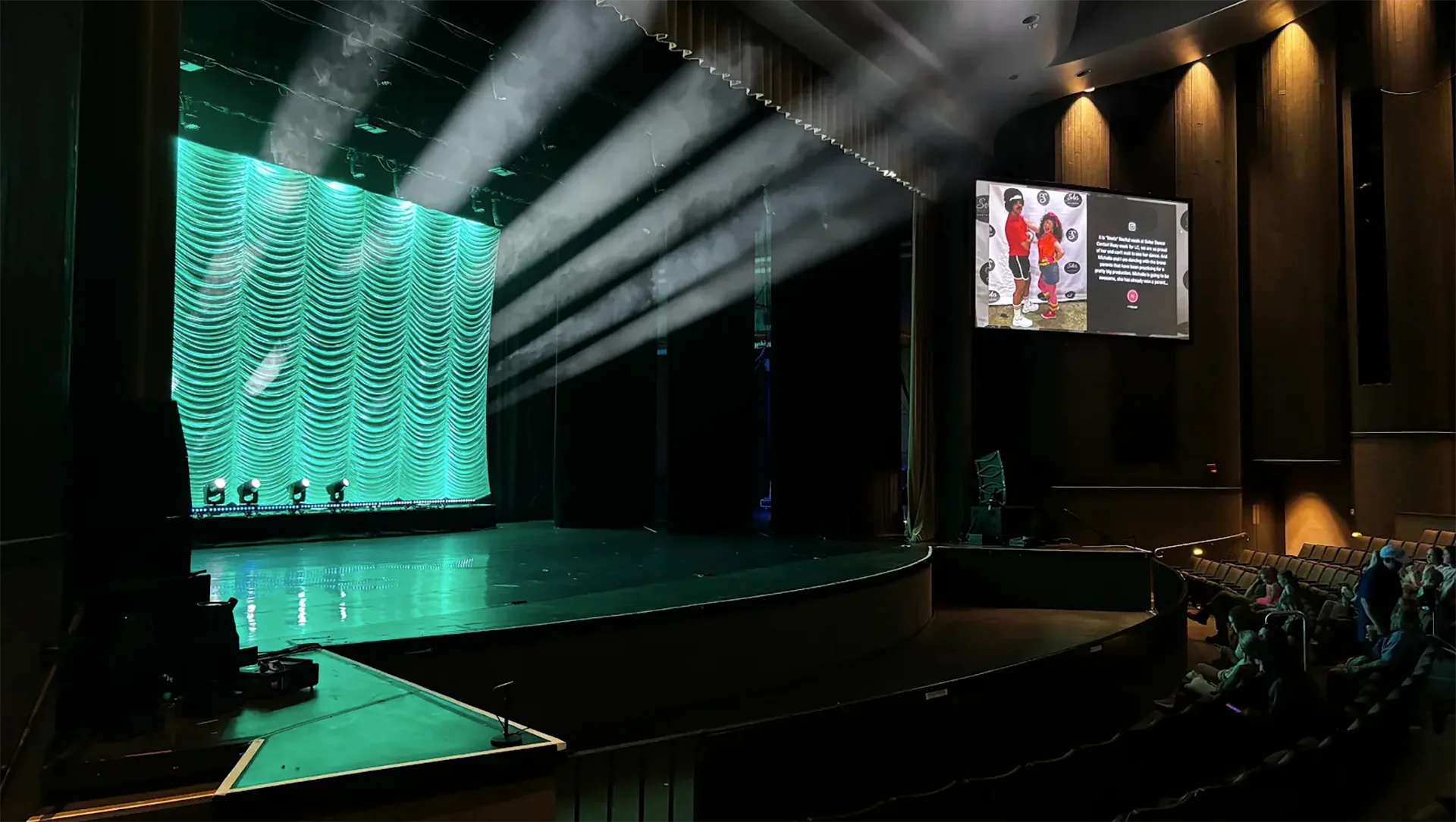
Before making lighting decisions, it helps to understand how the event needs to work from beginning to end.
That starts with a few practical questions:
- Where should the audience’s attention be at different points in the event?
- How should the room feel from one moment to the next?
- Where does the event need more energy, and where does it need less?
- How will the lighting work with video, scenic elements, cameras, and the venue itself?
There are also details the audience may never notice, like sightlines, camera exposure, room limitations, and transitions between different parts of the program.
Thinking through those things early helps make lighting part of the overall event plan instead of something that’s figured out on its own.
It also gives the production team a chance to anticipate problems before they become problems.
Make Every Lighting Choice Count
Knowing what lighting can do is one thing. Knowing when to use it, when to pull back, and what the event actually needs is what makes the difference.
Bluewood approaches event lighting the same way we approach the rest of a production: understand what matters first, then build around it.
That means thinking through the details, planning for the unexpected, and making choices that support the event instead of distracting from it.
If you’re planning an event and want the production to feel intentional from the first moment to the last, start the conversation with Bluewood.